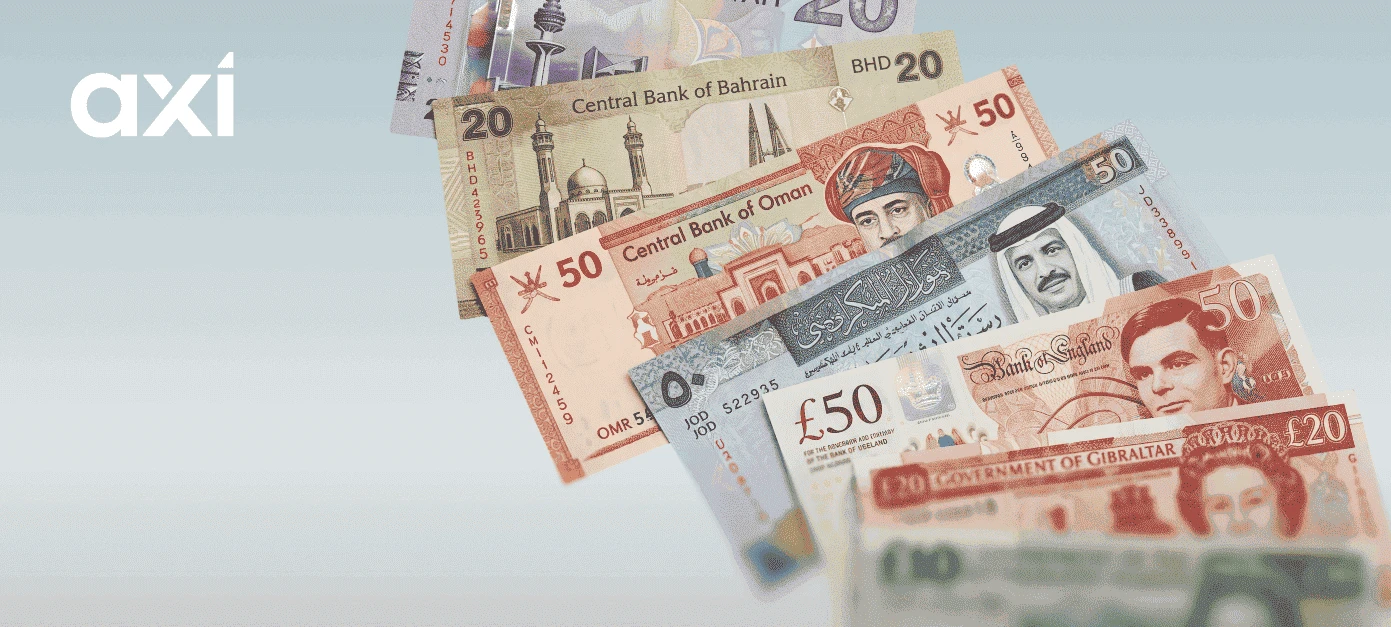
The Kuwaiti dinar (KWD) is the highest-valued currency in the world when measured by what one unit is worth in US dollars.
The Bahraini dinar (BHD) and the Omani rial (OMR) follow in this ranking. Here, “strongest” means the highest exchange value per unit. It does not mean the currency is the most widely traded, has gained the most value recently or belongs to the largest economy.
Top 10 strongest currencies in the world (valued against the USD)
# | Currency | Value of | Value in USD* |
| 1 | Kuwaiti dinar | 1 KWD | 3.20 |
| 2 | Bahraini dinar | 1 BHD | 2.66 |
| 3 | Omani rial | 1 OMR | 2.60 |
| 4 | Jordanian dinar | 1 JOD | 1.41 |
| 5 | British pound | 1 GBP | 1.31 |
| 6 | Gibraltar pound | 1 GIP | 1.31 |
| 7 | Falkland Islands pound | 1 FKP | 1.31 |
| 8 | Saint Helena pound | 1 SHP | 1.31 |
| 9 | Swiss franc | 1 CHF | 1.20 |
| 10 | Cayman Islands dollar | 1 KYD | 1.20 |
*The table shows values in US dollars, not Malaysian ringgit (MYR). The exchange rates are updated daily. GIP, FKP and SHP are separate ISO 4217 currencies, each pegged 1:1 to the British pound (GBP).
Overview of selected high-value currencies
The profiles below cover selected currencies from the ranking, along with the euro and US dollar for comparison. They do not follow the order of the table above.
- Kuwaiti dinar (KWD)
- Bahraini dinar (BHD)
- Omani rial (OMR)
- Jordanian dinar (JOD)
- British pound (GBP)
- Gibraltar pound (GIP)
- Cayman Islands dollar (KYD)
- Swiss franc (CHF)
- Euro (EUR)
- United States dollar (USD)
Kuwaiti dinar (KWD)
(strongest currency in the world)
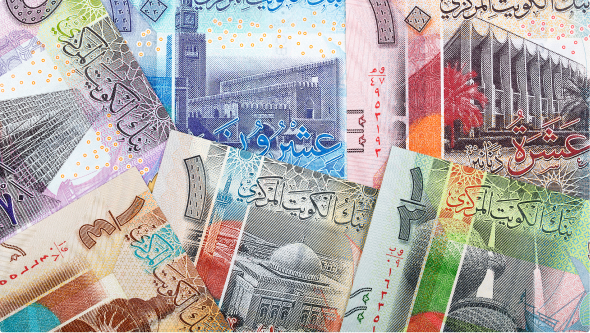
The Kuwaiti dinar (KWD) has been the official currency of Kuwait since 1961, when it replaced the Gulf rupee. Its symbol is “KD” or “د.ك” in Arabic.
Unlike the currencies of most other Gulf Cooperation Council (GCC) members, the Kuwaiti dinar is not pegged to the US dollar alone. It is linked to a basket of international currencies whose composition is not disclosed.
The Kuwaiti dinar is primarily used in Kuwait, and its banknotes rarely circulate outside the country. A dinar is divided into 1,000 fils. Banknotes are available in denominations of 1/4, 1/2, 1, 5, 10 and 20 dinars and feature Kuwaiti landmarks and cultural symbols.
Bahraini dinar (BHD)
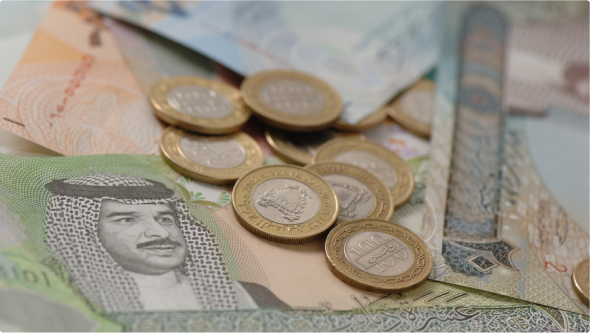
The Bahraini dinar (BHD) is the official currency of the Kingdom of Bahrain, an island nation located in the Middle East. It has been the currency of Bahrain since 1965, replacing the Gulf Rupee. The Bahraini dinar is known for its high value and stability. The symbol for the Bahraini dinar is "BD" or "د.ب," in Arabic.
The Bahraini dinar is pegged to the US dollar at 1 BHD = 2.659 USD (0.376 BHD per USD). The value of the BHD, therefore, fluctuates very rarely.
Bahrain has no currency controls in place, which allows the free movement of capital. While the BHD is accepted internationally, it is primarily used within Bahrain.
The Bahraini dinar is divided into 1,000 fils. However, prices are typically quoted in dinars. The Bahraini dinar is available in banknotes with denominations of 1/2, 1, 5, 10, and 20 dinars. Coins are also in circulation with denominations of 5, 10, 25, 50, and 100 fils. The banknotes and coins feature images of important Bahraini landmarks, historical figures, and cultural symbols.
Omani rial (OMR)
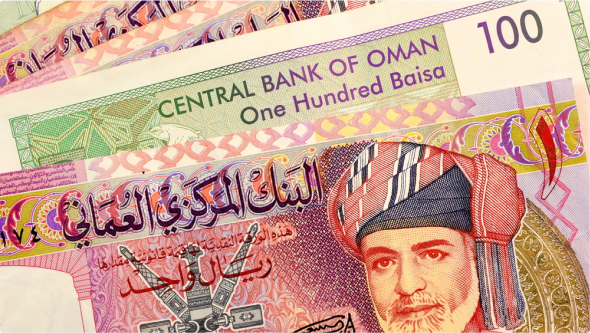
The Omani rial (OMR) is the official currency of the Sultanate of Oman, a country located in the Middle East. Oman replaced the Gulf rupee with the Saidi rial in 1970. The Omani rial replaced the Saidi rial at par in 1972. The Omani rial is known for its high value and stability. The symbol for the Omani rial is OMR or "ر.ع." in Arabic.
The Omani rial is pegged to the US dollar at 1 OMR = 2.6008 USD (1 USD = 0.3845 OMR). Oman has liberal currency controls compared to the rest of the region.
The Omani rial is divided into 1,000 baisa, although prices are usually quoted in rials. The Omani rial is available in banknotes with denominations of 1, 5, 10, 20, and 50 rials. Coins are issued in denominations of 5, 10, 25, and 50 baisa. The banknotes and coins feature images of significant Omani landmarks.
Jordanian dinar (JOD)
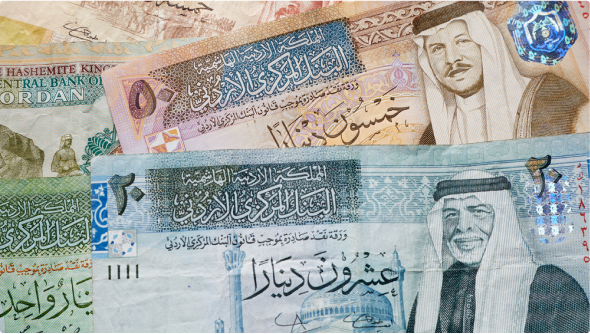
The Jordanian dinar (JOD) is the official currency of the Hashemite Kingdom of Jordan, a country located in the Middle East. Its symbol is “JD”. The dinar is divided into 1,000 fils. Ten fils equal one qirsh (piaster), and 100 fils equal one dirham.
The Jordanian currency was introduced in 1950, just four years after the Hashemite Kingdom of Jordan was established.
Unlike other Middle Eastern countries that pegged their currencies to the US dollar, Jordan is not a major oil-producing country. It maintains the peg to keep the economy stable, inflation under control and to make international trade smoother. Jordan´s central bank is maintaining a fixed exchange rate of 1 JOD = 1.41 USD.
Jordanian banknotes are issued in denominations of 1, 5, 10, 20, and 50 dinars. Coins are issued in denominations of 1 dinar, 1/2 dinar, 1/4 dinar, and smaller denominations in fils.
British pound (GBP)
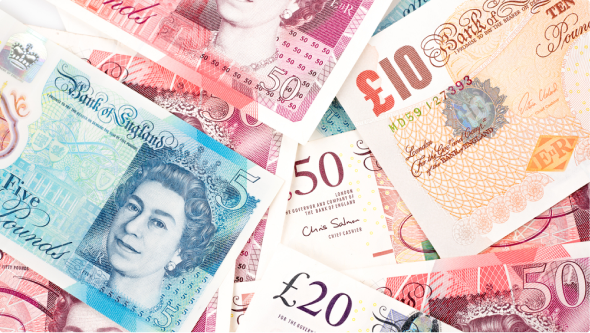
The British pound, also known as pound sterling (GBP), is the official currency of the United Kingdom. It is one of the world’s oldest currencies and remains a major reserve currency. Its symbol is “£”.
Sterling played an important role in international trade and finance during the British Empire. Today, its exchange rate against other major currencies fluctuates with factors such as interest rates, inflation, economic data and geopolitical events.
The Bank of England, founded in 1694, is the UK’s central bank. It conducts monetary policy and works to maintain monetary and financial stability.
The pound has experienced periods of sharp volatility. In September 2022, it fell close to US$1.03 after the Truss government announced plans to increase borrowing while cutting taxes. In 1992, the UK withdrew the pound from the European Exchange Rate Mechanism (ERM) on a day known as Black Wednesday.
One pound is divided into 100 pence. Bank of England banknotes are issued in denominations of £5, £10, £20 and £50. Coins are available in denominations of 1p, 2p, 5p, 10p, 20p, 50p, £1 and £2.
Gibraltar pound (GIP)
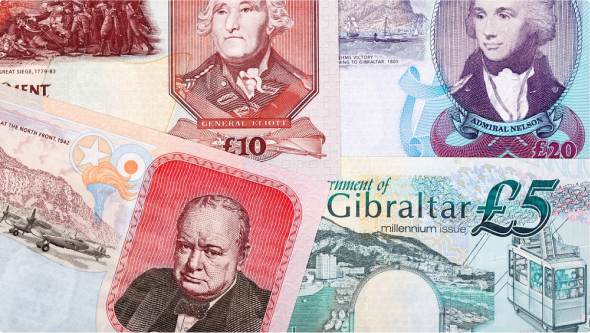
The Gibraltar pound (GIP) is the official currency of Gibraltar, a British Overseas Territory in southern Europe. Gibraltar issues its own banknotes and coins. The Gibraltar pound is pegged to the British pound at a rate of 1:1 and uses the same “£” symbol.
Both Gibraltar pounds and British pounds are widely accepted in Gibraltar. Gibraltar-issued notes and coins, however, are not generally accepted in the United Kingdom.
One Gibraltar pound is divided into 100 pence. The Government of Gibraltar issues banknotes in denominations of £5, £10, £20, £50 and £100. The notes feature local landmarks and symbols.
Cayman Islands dollar (KYD)
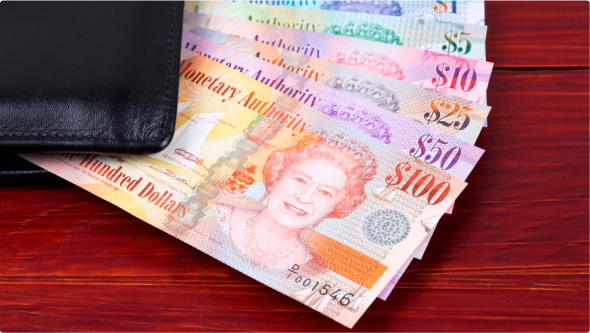
The Cayman Islands dollar (KYD) is the official currency of the Cayman Islands, a British Overseas Territory in the Caribbean. The Cayman Islands Monetary Authority issues and regulates the currency, which is abbreviated as “CI$”.
The Cayman Islands dollar is pegged to the US dollar at CI$1 to US$1.20.
One Cayman Islands dollar is divided into 100 cents. Banknotes are available in denominations of CI$1, CI$5, CI$10, CI$25, CI$50 and CI$100. Circulating coins include 1, 5, 10 and 25 cents.
Swiss franc (CHF)
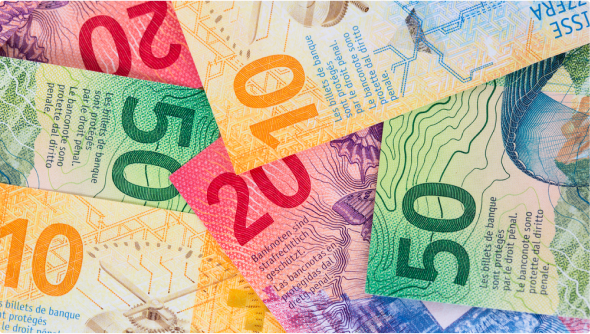
The Swiss franc (CHF) is the official currency of Switzerland and Liechtenstein. It is held as a reserve currency and is often viewed as a safe haven in periods of market uncertainty.
The Swiss National Bank (SNB) introduced a minimum exchange rate of 1.20 Swiss francs per euro in 2011. It ended that policy in January 2015.
One Swiss franc is divided into 100 smaller units called centimes in French and Rappen in German. The SNB issues banknotes in denominations of 10, 20, 50, 100, 200 and 1,000 francs. Coins include 5, 10, 20 and 50 centimes, as well as 1, 2 and 5 francs.
Euro (EUR)
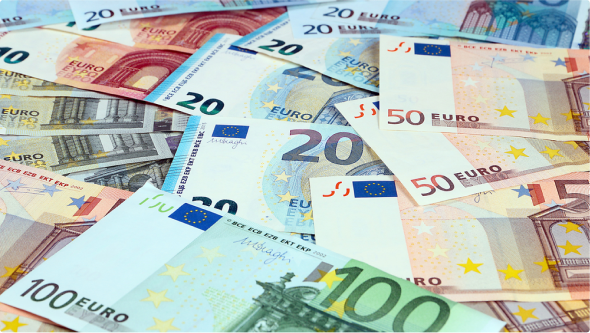
The euro (EUR) is the shared currency of the euro area and the second most widely held reserve currency after the US dollar.
The euro was introduced on 1 January 1999 for electronic transactions and accounting. Euro banknotes and coins entered circulation on 1 January 2002. Its symbol is “€”.
The euro has a floating exchange rate. Its value is influenced by economic conditions and monetary policy in the euro area, as well as developments in other major economies.
One euro is divided into 100 cents. Euro banknotes feature European architectural styles, while coins have a common European side and a national side.
United States dollar (USD)
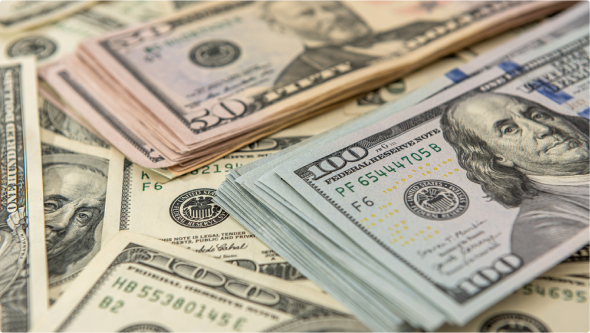
The US dollar (USD) is the official currency of the United States and the world’s most widely held reserve currency. Its symbol is “$”.
The dollar plays a central role in international trade and finance. Many countries use it as an anchor for their exchange rates, including most members of the Gulf Cooperation Council.
The US dollar is the reference currency for this ranking. A currency worth more than one US dollar per unit is not necessarily more widely used in international transactions.
The dollar’s exchange rate against floating currencies moves with factors such as interest rates, inflation, economic indicators and investor sentiment. One dollar is divided into 100 cents. Common banknote denominations include $1, $5, $10, $20, $50 and $100.
Ready to trade your edge?
Join thousands of traders and trade CFDs on forex, shares, indices, commodities and cryptocurrencies.
The data is sourced from third-party providers. This information is not to be construed as a recommendation; or an offer to buy or sell; or the solicitation of an offer to buy or sell any security, financial product, or instrument; or to participate in any trading strategy. It has been prepared without taking your objectives, financial situation, or needs into account. Any references to past performance and forecasts are not reliable indicators of future results. Axi makes no representation and assumes no liability regarding the accuracy and completeness of the content in this publication. Readers should seek their own advice.

Milan Cutkovic
Milan Cutkovic is an experienced trader and market analyst specializing in forex, indices, commodities, and stocks. He was one of the first traders accepted into the Axi Select program, which identifies talented traders and supports their professional development.
He is passionate about helping others improve their trading skills through educational articles, eBooks, and content published on the Axi blog. His work is regularly featured and quoted in major international media outlets, including Yahoo Finance, Business Insider, Barron's, CNN, Reuters, New York Post, and MarketWatch.