


What could Bitcoin be worth between 2026 and 2050? It's a question on the mind of many investors and traders. In this article, we explore a range of forecasts, long-term trends, and the factors that may influence Bitcoin’s value from today to a quarter-century from now.
Bitcoin has existed for less than two decades, yet it has already forced the financial world to rethink what money can be. Unlike traditional assets with centuries of historical data, its limited track record, high volatility, and the evolving infrastructure surrounding the network make long-term predictions inherently uncertain. The forecasts presented here are not financial advice. They reflect market opinions, analyst models, and publicly available research.
At its core, the Bitcoin blockchain is a public, decentralised digital ledger that records every transaction. It is maintained not by a single entity but by a global network of computers, or nodes, that work together to keep the system secure.
Transactions are bundled into blocks. Each block contains a limited number of entries and a unique cryptographic code that links it to the previous block, forming a continuous chain of data. To add a new block to the chain, miners compete to solve complex cryptographic puzzles using specialised hardware. The first to find the solution earns the right to add the new block and is rewarded with newly created bitcoins along with transaction fees.
Bitcoin's fixed maximum supply of 21 million coins is a fundamental design feature that creates absolute scarcity. No central bank, government, or developer can alter this cap, which is why BTC is increasingly compared to gold as a long-term store of value.
Bitcoin scarcity is reinforced by a mechanism known as the halving cycle. Approximately every 210,000 blocks, or roughly every four years, the reward given to miners for adding a new block is cut in half. These scheduled reductions limit the rate at which new bitcoins are created and released into circulation.
Since Bitcoin's launch in 2009, block rewards have steadily decreased, starting at 50 bitcoins per block. They were then reduced to 25, then to 12.5, and later to 6.25. The most recent halving occurred in April 2024, reducing the reward to its current level of 3.125 bitcoins per block.
It is important to note that block rewards are the only way new bitcoins enter circulation.
Unlike traditional fiat currencies, where central banks can increase the money supply at will, Bitcoin’s supply schedule is strictly predetermined by its code.
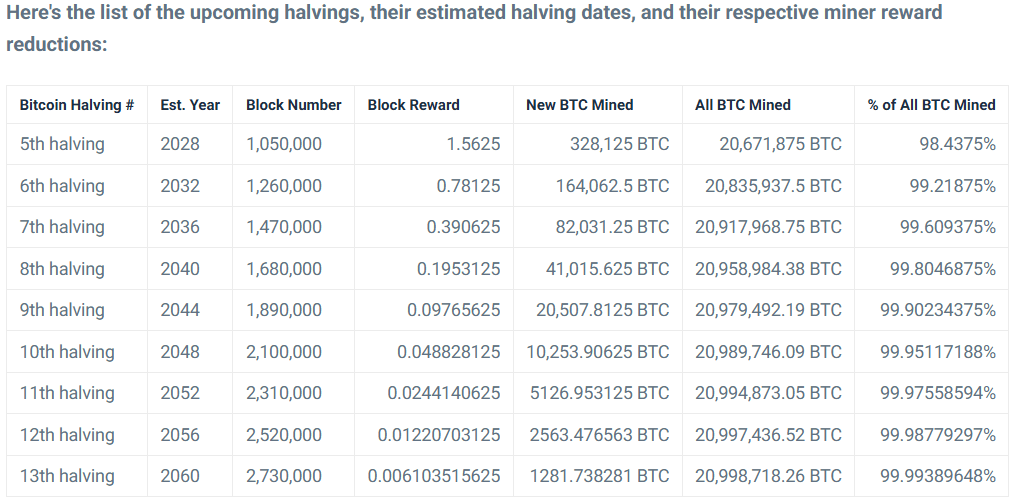
Bitcoin Halving Dates: When Is the Next BTC Halving? |CoinCodex
Because the Bitcoin blockchain is public, anyone can access and analyse its transaction history. This has given rise to on-chain analysis, a method that uses publicly available blockchain data to understand network activity and user behaviour.
This type of analysis provides insight into how Bitcoin is being used, stored, and transferred. Analysts can track metrics such as transaction volume, the number of new and active addresses, exchange inflows and outflows, hash rate, and miner activity. By combining these signals, researchers can identify trends that may signal shifts in market sentiment or broader network dynamics that may influence price trends.
BTC is famously volatile and speculative, but its price movements are not random. They result from the interaction between supply and demand, influenced by a combination of economic, technological, and psychological factors. These include:
Year |
Lowest Price (USD) |
Highest Price (USD) |
Average Price* (USD) |
| 2009 |
0.00 |
0.00099 |
0.00099 |
| 2010 |
0.01 |
0.39 |
0.06 |
| 2011 |
0.29 |
32 |
5.27 |
| 2012 |
4 |
16 |
7.38 |
| 2013 |
13 |
1163 |
198 |
| 2014 |
310 |
936 |
525 |
| 2015 |
172 |
465 |
272 |
| 2016 |
351 |
981 |
567 |
| 2017 |
784 |
19,892 |
4,128 |
| 2018 |
3,217 |
18,343 |
7,558 |
| 2019 |
3,401 |
13,017 |
7,343 |
| 2020 |
3,850 |
29,096 |
11,641 |
| 2021 |
29,796 |
68,789 |
43,958 |
| 2022 |
15,500 |
47,835 |
32,663 |
| 2023 |
16,500 |
44,750 |
25,787 |
| 2024 |
38,520 |
108,300 |
93,430 |
| 2025 |
78,128 |
124,414 |
101,615 |
| 2026 |
59,930 |
97,939 |
78,355 |
*Calculated by taking the sum of the daily closing prices and dividing it by the number of days in the year.
Year |
High |
Year |
Low |
Pullback % |
|
2013 |
1,163 |
2015 |
160 |
-86% |
|
2017 |
20,000 |
2018 |
3,200 |
-84% |
|
2021 |
69,000 |
2022 |
15,500 |
-77% |
|
2025 |
124,414 |
2026 |
59,930 |
-53% |
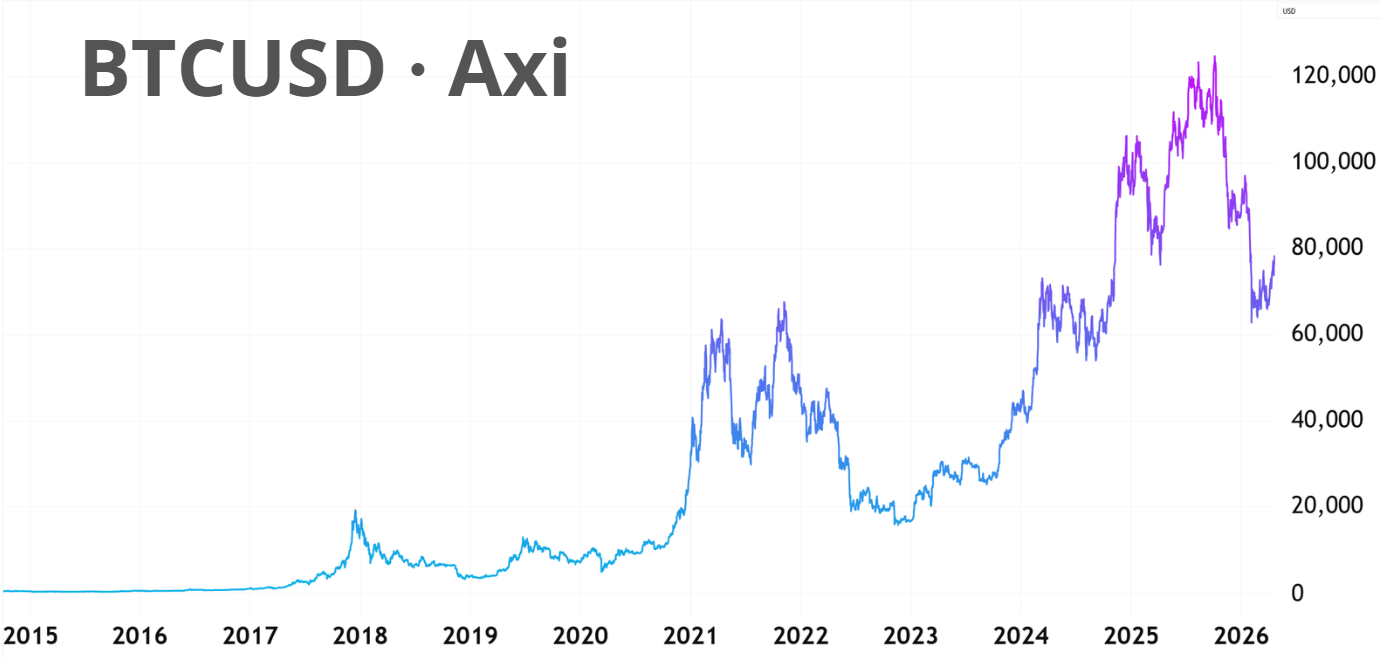
Few assets have matched Bitcoin's capacity for both extraordinary gains and brutal losses. Each bull market has delivered remarkable returns, only to be followed by sharp corrections. Historically, Bitcoin has retraced between 70% and 85% from previous all-time highs, though both the percentage gains and the depth of corrections have been gradually diminishing with each successive cycle.
Bitcoin’s first reported exchange rate was less than a tenth of a penny in 2009. By 2011, it had reached a milestone of $1 as early adoption began. Following the first halving in November 2012, the price exploded from $11 to over $1,100 within a year. A steep correction followed this historic rally, causing the price to plummet 86% to around $160 by early 2015.
The second halving occurred in July 2016, setting the stage for the next bull market. Bitcoin climbed from about $600 to nearly $20,000 by December 2017, an astounding gain of more than 3,000%. By the end of 2018, it had collapsed to $3,200, an 84% correction that marked the start of the next "crypto winter".
The third halving took place in May 2020, and Bitcoin rallied from below $9,000 to a new all-time high of nearly $69,000 in November 2021, a gain of around 650%. At its peak, the asset’s market capitalisation briefly exceeded $1.25 trillion. A sharp downturn followed, with the price dropping 77% to nearly $15,000 by November 2022.
Bitcoin began its recovery in January 2023. The fourth halving took place on April 20, 2024, with Bitcoin trading around $64,500, having reclaimed the $40,000 level for the first time since the 2022 bear market and the Terra ecosystem collapse. By late 2025, BTC had reached a new all-time high in the $115,000-$126,000 range, driven by institutional ETF demand and a favourable regulatory environment. By early 2026, prices had retraced to the mid-$60,000s, with the network's market capitalization hovering around $1.3–$1.4 trillion.
While Bitcoin’s volatility frequently sparks debate when compared to traditional assets, this turbulence is not just typical in emerging asset classes; it's necessary for healthy market development.
Each “crypto winter” has historically acted as a cleansing process. It removes weak projects and unsustainable business models, clearing the way for stronger players to emerge in the next cycle. This is a pattern seen before in the wider tech world. After the Dotcom crash, for example, survivors like Amazon and eBay went on to become the dominant market leaders of their era. In the crypto space, the projects that endure the bear market often become the market leaders of the following bull run.
Bitcoin supply dynamics and market structure in 2026 show a mixed but structurally tight environment. Reserves on centralised exchanges remain at their lowest levels since 2018, indicating strong accumulation and a shift toward self‑custody by both retail and institutional holders. At the same time, on‑chain data suggest that some long‑term investors and large holders have partially liquidated or rebalanced positions since 2024, as earlier‑cycle participants take profits and adjust portfolios. Most of the total BTC supply is still owned by long-term investors, which leads to a limited supply that can affect prices in spot markets, perpetuals, and leveraged instruments.
The launch of Bitcoin ETFs in early 2024 was a major turning point for the crypto market, providing traditional investors with regulated, custodied exposure to Bitcoin without the need to manage wallets or self‑custody. ETF demand has remained an important source of buying pressure on spot markets, though flows have become more volatile and sensitive to macro and price conditions.
Cumulative inflows into spot Bitcoin ETFs now exceed $50 billion since launch, with the majority arriving in 2024 and 2025. A substantial portion of that (around $14–15 billion) entered the market in 2025 alone, with demand spiking notably in July following a series of pro‑crypto legislative and regulatory developments in the US. In 2026, flows have turned more mixed as investors rotate in and out of risk assets, with episodes of both inflows and outflows. ETF-backed holdings nevertheless remain a structurally important source of demand, continuing to shape pricing, liquidity, and overall market activity.
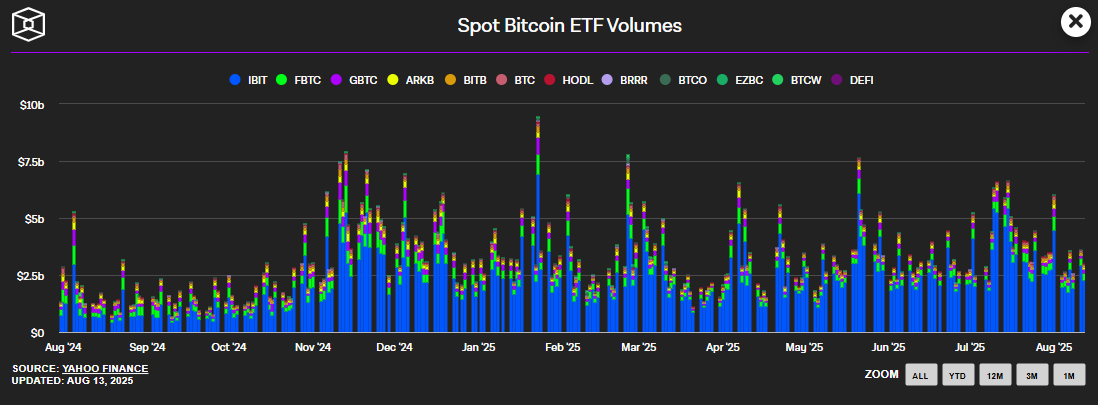
Spot Bitcoin ETF Volumes Daily Chart: BlackRock, Fidelity and More
The Trump administration's pro-crypto stance has influenced global sentiment and institutional risk-taking. The change in regulatory tone has supported ETF flows, futures open interest, and longer‑term positioning. However, many initiatives are still in flux and subject to political and legislative debate.
This shift is anchored in several key developments:
At the same time, the Clarity Act, intended to provide clearer rules for digital‑asset markets, has stalled in the Senate, largely due to disputes over whether stablecoins should be allowed to generate yield for holders. This demonstrates that the broader regulatory picture remains uneven, with supportive measures coexisting with ongoing legislative and political uncertainty.
Bitcoin‑linked equities such as Coinbase, MicroStrategy, and major mining names have shown a mixed but often leveraged relationship with BTC in 2026. Periods of strong Bitcoin rallies have frequently translated into sharper gains in these stocks, at times pushing their price‑returns above those of BTC itself, particularly when ETF‑driven flows and macro‑risk‑on sentiment coincide. However, they also tend to correct more sharply on BTC pullbacks, so while they can act as performance‑amplified proxies for Bitcoin, the outperformance is episodic rather than consistent across the full 2026 cycle.
The 2022 collapses of FTX, Terra, and others triggered widespread deleveraging. Since then, the market has staged a strong recovery, strengthened by improved regulation, institutional buy-in, and innovative new products. The convictions of key bad actors and structural cleanup have also increased trust, bringing significant benefits for traders, including reduced counterparty risk and more predictable liquidity.
Despite the recent pullback, Bitcoin is still one of the top global assets by market capitalisation. As inflation, de-dollarisation, and geopolitical instability intensify, investors increasingly view Bitcoin as a crucial macro hedge. For all types of investors, this narrative supports long-term accumulation, while its inherent volatility continues to offer frequent short-term setups for active market participants.
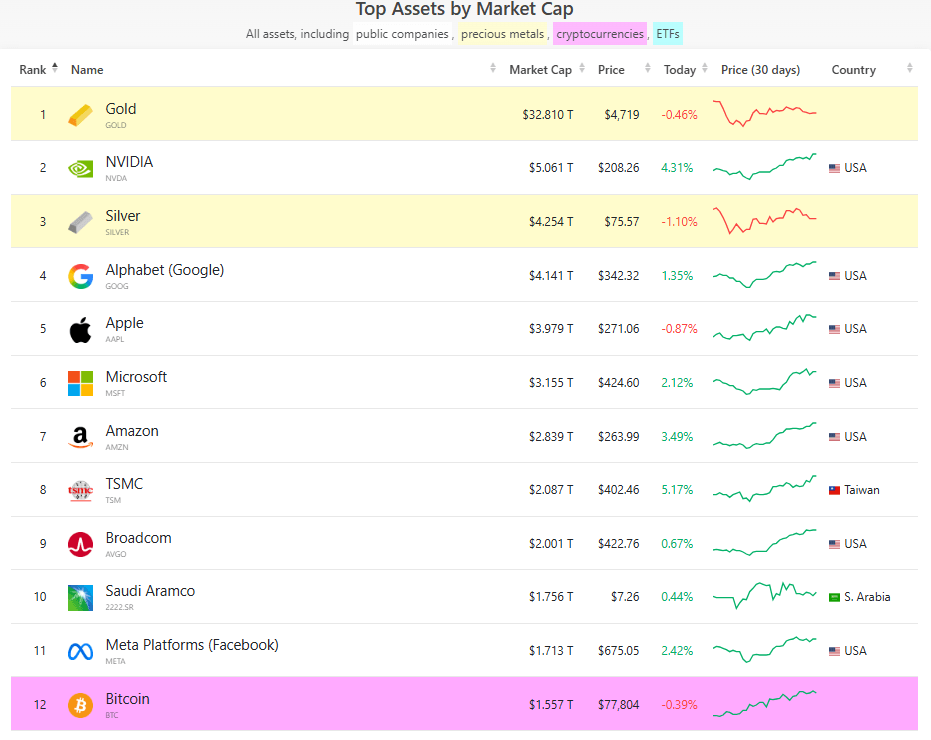
Assets ranked by Market Cap - CompaniesMarketCap.com
Source |
2026 |
2027 |
2030 |
2040 |
2050 |
|
Bitwise / Matt Hougan |
Above $126,080 |
~$240K |
~$500K |
$1.4M (2035) |
* |
|
BitMEX / Arthur Hayes |
$250K |
$500K–$750K |
$3M |
* |
* |
|
CoinCodex (Algorithmic) |
$72K–$93K |
$55K–$89K |
$153K–$210K (2031) |
~$1.2M |
~$1.5M |
|
VanEck |
$100K+ |
* |
$500K–$600K |
* |
$2.9M |
|
Coinpedia |
$150K–$230K (avg. $200K) |
$170K–$330K (avg. $250K) |
$380K–$900K (avg. $750K) |
$5.8M–$13.5M (avg. $9.6M) |
$162M–$378M (avg. $270M) |
|
Cryptonews |
$75K–$225K (central $110K–$150K) |
* |
$1.23M |
* |
* |
|
Fundstrat / Tom Lee |
$200K–$250K |
* |
$3M |
* |
* |
|
Robert Kiyosaki |
$250K |
* |
$1M |
* |
* |
|
Adam Back |
* |
$500K–$1M |
* |
Multi-million |
* |
|
Standard Chartered |
$150K–$250K |
$400K |
$500K (2029) |
* |
* |
|
PlanB / Stock-to-Flow |
$200K–$600K |
* |
$2.5M–$10M |
$25M–$100M |
$250M–$1B |
|
Bitcoin Rainbow Chart |
$300K–$500K (avg. $400K) |
* |
$1M–$5M (avg. $3M) |
* |
* |
|
Mike McGlone / Bloomberg |
$10K–$65K |
* |
* |
* |
* |
|
ARK Invest / Cathie Wood |
* |
* |
$1M–$1.5M |
* |
* |
|
Tim Draper |
$250K |
* |
* |
* |
* |
|
Michael Saylor |
* |
* |
* |
* |
$13M (by 2045) |
|
Traders Union |
* |
~$140K |
~$178K |
$500K–$1M+ |
* |
|
Polymarket (crowd) |
$80K most likely |
* |
* |
* |
* |
|
Fidelity |
Adoption-driven, no target |
* |
* |
* |
* |
|
Pantera Capital |
* |
* |
~$740K (2029) |
* |
* |
|
Consensus Range |
$100K–$250K |
$170K–$400K |
$500K–$1.5M |
$1M–$5M |
$2M–$13M |
* = No prediction provided for this year. All figures are analyst estimates and do not constitute financial advice.
Forecasts for Bitcoin in 2026 span a wide range, but remains bullish overall, supported by continued institutional adoption, ETF inflows, and the impact of the 2024 halving. Many analysts also suggest that Bitcoin may begin to mature and break away from its traditional four-year cycle, becoming more susceptible to macro and capital market dynamics.
Several institutions place Bitcoin between $100,000 and $250,000. Bitwise expects Bitcoin to move beyond its historical cycle patterns and set new highs above previous peaks, driven by accelerating institutional allocation and ETF demand absorbing a large share of new supply. Standard Chartered is more cautious forecasting $150,000, while maintaining upside scenarios toward $250,000 under tighter macro conditions. VanEck is also bullish, pointing to sustained ETF inflows and favourable macro, with Bitcoin trading well into six-figure territory. Fundstrat’s Tom Lee shares this view, projecting $200,000 to $250,000, although he expects volatility earlier in the year.
Model-based and aggregated forecasts are more moderate. Coinpedia estimates a range between $100,000 and $180,000, supported by post-halving expansion and continued institutional accumulation. CoinCodex, using algorithmic modelling, projects a lower range between $72,169 and $93,294, assuming more conservative growth. Cryptonews highlights a wide expert band of $75,000 to $225,000, with a central tendency around $110,000 to $150,000, suggesting a bullish yet volatile year. Polymarket data shows a more cautious crowd consensus, with $80,000 as a likely target, while also pricing in downside risks toward the $45,000-$55,000 range.
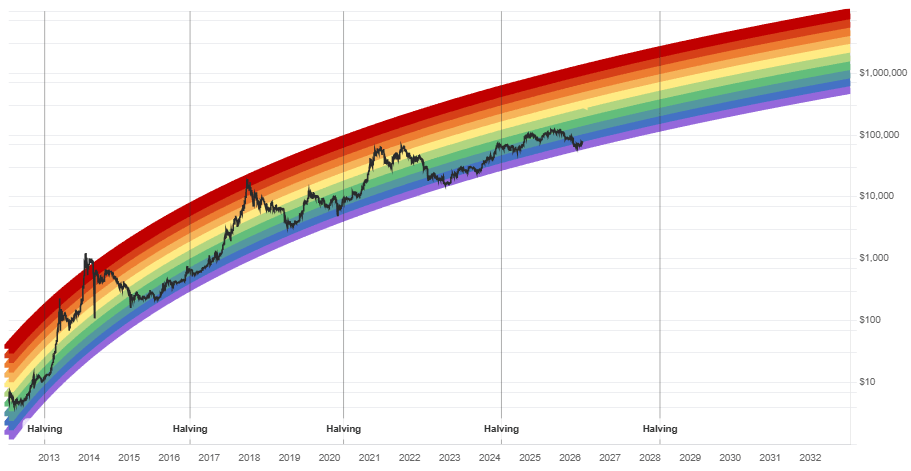
Arthur Hayes and Tim Draper both project Bitcoin reaching $250,000, citing monetary debasement and accelerating adoption. Robert Kiyosaki echoes this outlook, framing Bitcoin as protection against systemic financial risk. On the higher end, the Bitcoin Rainbow Chart suggests a potential range between $300,000 and $500,000, based on long-term sentiment and logarithmic growth trends.
On the bearish side, Mike McGlone from Bloomberg Intelligence warns that Bitcoin could fall toward $10,000 in a severe macro downturn, while identifying $50,000 to $65,000 as a more realistic lower support range if liquidity tightens.
Sources
https://www.bitmex.com/blog/q1-2026-outlook
https://x.com/coinbureau/status/2004515034354061585?s=20
https://www.dlnews.com/articles/markets/bitwise-predicts-tenfold-bitcoin-price-increase-by-2035/
https://coinpedia.org/price-prediction/bitcoin-price-prediction/
https://coincodex.com/crypto/bitcoin/price-prediction/
https://cryptonews.net/news/bitcoin/32604285/
Bitcoin Rainbow Chart - Blockchaincenter
https://cryptonews.net/news/bitcoin/32247942/
https://finance.yahoo.com/news/robert-kiyosaki-predicts-bitcoin-soar-171629682.html
Forecasts for Bitcoin in 2027 suggest continued upside following the post-halving expansion phase, though projections vary significantly depending on assumptions around macro conditions, institutional adoption, and market maturity.
A moderate consensus among models and analysts places Bitcoin in the $170,000 to $330,000 range. Coinpedia forecasts an average price of around $250,000, driven by continued cycle momentum and growing institutional participation. Bitwise’s long-term framework implies a similar trajectory, suggesting Bitcoin could reach approximately $240,000 by 2027 as part of a broader path toward higher valuations in the following decade. Retail-orientated aggregator Traders Union also aligns with this trend, projecting Bitcoin to reach around $140,000, reflecting a more conservative but still upward trajectory.
Algorithmic models present a more cautious outlook. CoinCodex forecasts Bitcoin trading between $55,811 and $89,265, indicating a potential consolidation phase following the strong gains of previous years and highlighting the possibility of slower growth under more neutral market conditions.
More bullish projections are driven by macro and supply-driven narratives. Arthur Hayes expects Bitcoin to reach $500,000 to $750,000 by 2027, citing renewed monetary expansion and liquidity cycles. Adam Back presents an even more aggressive outlook, suggesting Bitcoin could reach $500,000 to $1 million within the current cycle, often associated with the 2027–2028 timeframe, based on strong supply constraints and increasing global demand.
In summary, forecasts for 2027 range from approximately $67,000 to $1 million, though most projections cluster between $170,000 and $330,000. Dominant themes across forecasts remain continued institutional adoption, macro liquidity conditions, and the longer-term impact of Bitcoin’s fixed supply, with divergence caused by differing views on the effects of the next market cycle.
https://tradersunion.com/currencies/forecast/btc-usd/
Looking toward 2030, which falls in the cycle following the 2028 halving, Bitcoin forecasts range from the high six figures to multi-million-dollar targets. The common theme is that Bitcoin may evolve from a speculative asset into a more established component of global finance.
A broad cluster of forecasts sits between $380,000 and $900,000. Coinpedia projects a $380,000 to $900,000 range, with an average near $750,000, based on continued adoption and expansion of blockchain payment infrastructure. Pantera Capital targets $740,000 by 2029, citing the halving cycle and rising institutional demand. VanEck also supports a high six-figure outcome, forecasting roughly $500,000 to $600,000 in a scenario where Bitcoin reaches about half of gold’s market value.
ARK Invest’s research places Bitcoin around $1 million by 2030 as a central case, with upside scenarios toward $1.5 million if adoption accelerates more quickly than expected. These projections are based on Bitcoin’s growing use in institutional portfolios, corporate treasuries, and as a non-sovereign store of value.
More conservative and model-based estimates remain well below the seven-figure mark. Traders Union projects Bitcoin at around $178,000 by 2030, while CoinCodex forecasts $153,552 to $210,238 by 2031, suggesting a slower growth path if macro conditions become less supportive or if adoption matures more gradually.
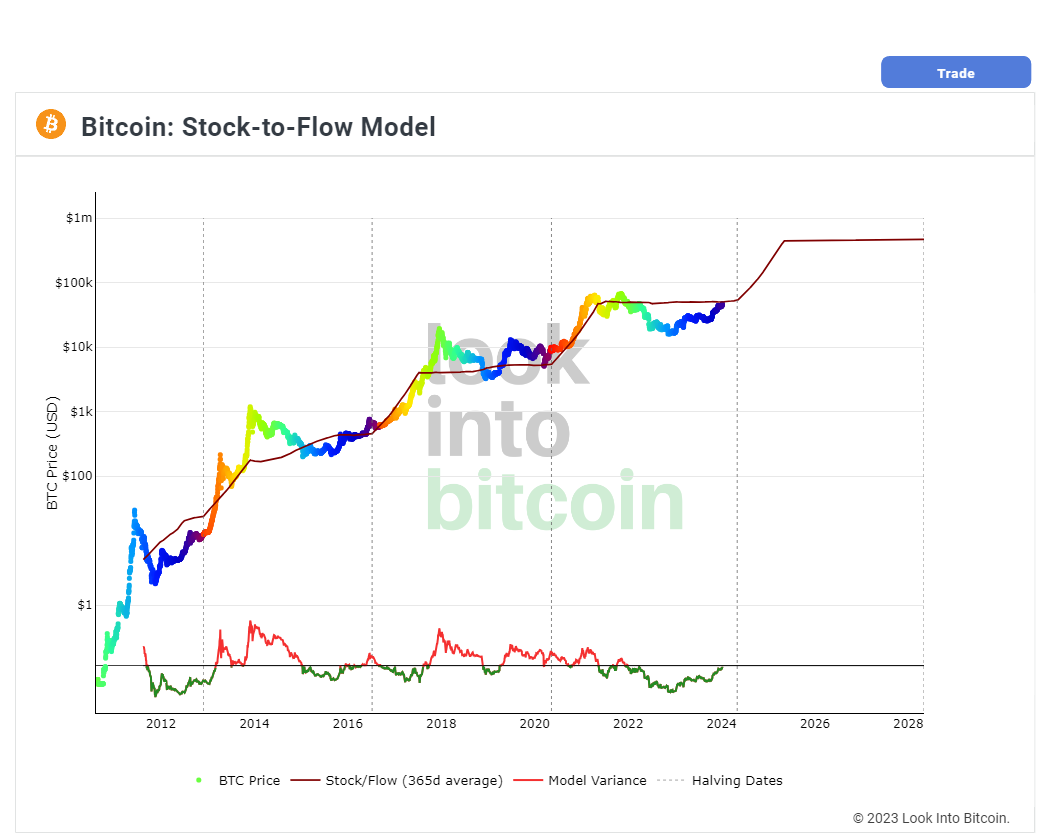
At the extreme end, PlanB’s revised Stock-to-Flow model projects a $2.5 million to $10 million range for 2030. This model assumes that scarcity from the 2028 halving will drive substantial price appreciation, although its assumptions and historical fit remain widely debated.
In summary, 2030 forecasts range from roughly $153,000 to $10 million, with most projections clustering between $500,000 and $1.5 million. The strongest convergence appears around high six-figure to low seven-figure valuations.
https://www.ark-invest.com/articles/valuation-models/arks-bitcoin-price-target-2030
https://x.com/coinbureau/status/2004515034354061585?s=20
Kiyosaki Predicts Bitcoin at $1 Million by 2030 as Economic Crisis Looms. How High Can BTC Price Go?
Stock to Flow Price Predictions
Stock-to-Flow Model | LookIntoBitcoin
By 2040, Bitcoin will be approaching full supply issuance, with approximately 99.8% of all coins mined, coinciding with the 8th halving cycle. At this stage, forecasts increasingly focus on extreme scarcity, long-term adoption, and Bitcoin’s potential role as a global reserve asset, leading to a wide range of multi-million-dollar projections.
More conservative, model-driven estimates suggest Bitcoin could reach around $1 million. CoinCodex projects this level based on continued growth across multiple halving cycles, reflecting a steady but maturing adoption curve rather than exponential expansion.
More bullish forecasts place Bitcoin firmly in the multi-million-dollar range. Coinpedia estimates a range between approximately $5.8 million and $13.5 million, with an average near $9.6 million, assuming Bitcoin maintains relevance in global finance and continues to benefit from long-term adoption trends. Similarly, Traders Union presents mid-six-figure to low-seven-figure projections.
At the extreme end, long-term views from industry figures such as Adam Back suggest high-level scenarios where Bitcoin could reach multi-million-dollar valuations by the late 2030s if adoption and reserve demand continue to accelerate.
In summary, forecasts for 2040 range from around $1 million to over $13 million, with most projections clustering in the multi-million-dollar range.
https://coinpedia.org/price-prediction/bitcoin-price-prediction/
Looking toward 2050, Bitcoin forecasts diverge significantly, reflecting uncertainty around its long-term role in the global financial system. The central question is whether Bitcoin will remain an alternative asset or evolve into a core component of global monetary and reserve infrastructure.
More conservative institutional frameworks suggest Bitcoin reaching the low millions. VanEck projects a price of approximately $2.9 million, based on Bitcoin playing a meaningful role in global trade settlement and central bank reserves, supported by continued institutional adoption.
Michael Saylor projects Bitcoin reaching $13 million by the mid-2040s, reflecting a belief that it will displace traditional stores of value such as gold and become a primary global reserve asset.
Coinpedia forecasts an extreme range between approximately $162 million and $378 million, with an average near $270 million. While these figures sit well beyond mainstream institutional projections, they assume that Bitcoin becomes the dominant global financial asset, with growth moderating only as the market approaches full maturity.
In summary, 2050 forecasts range from approximately $2.9 million to over $300 million, with outcomes heavily dependent on Bitcoin’s level of global adoption. While projections vary widely, the common theme is that if Bitcoin succeeds in its long-term thesis, its valuation is expected to reach multi-million-dollar levels, driven by its role in global finance and fixed supply.
(5) VanEck & Michael Saylor: $2.9M Bitcoin Changes the Game for Preferred Investors | LinkedIn
Bitcoin's long-term price trajectory remains one of the most debated questions in modern finance. The forecasts in this article reflect that divide, yet a directional consensus emerges: most analysts expect Bitcoin's value to be significantly higher across every time horizon covered here.
The structural case rests on fixed supply, predictable issuance, and deepening institutional integration, a demand-supply dynamic with no real precedent in traditional finance. Each successive cycle has produced shallower drawdowns and broader participation, suggesting gradual maturation.
Volatility, geopolitical shocks, and regulatory uncertainty remain real risks. A balanced approach combining long-term conviction with realistic risk awareness remains the most defensible position.
Ready to trade your edge?
Join thousands of traders and trade CFDs on forex, shares, indices, commodities, and cryptocurrencies!
References to forecasts and past performance are not reliable indicators of future results.
The images shown are for illustration purposes only. Data is sourced from third party providers.
This information is for educational purposes only and is not intended to be financial product advice or any investment recommendation. It is not to be construed as a recommendation; or an offer to buy or sell; or the solicitation of an offer to buy or sell any security, financial product, or instrument; or to participate in any trading strategy. It has been prepared without taking your objectives, financial situation and needs into account. Axi makes no representation and assumes no liability with regard to the accuracy and completeness of the content in this publication. Readers should seek their own advice.
FAQ
Bitcoin's price moves around the clock across global markets. For the most up-to-date BTC price, including live charts, spreads, and trading conditions, visit Axi's Bitcoin CFD instrument page, where you can track real-time price action and access trading directly from the same screen.
Most analysts agree that Bitcoin's long-term trajectory points significantly higher. By 2030, the mainstream institutional consensus sits between $500,000 and $1.5 million, driven by the 2028 halving, growing ETF adoption, and Bitcoin's emergence as a global reserve asset. By 2040 and beyond, forecasts broadly converge above $1 million as Bitcoin approaches full supply issuance.
Heading into 2025, the mainstream consensus placed Bitcoin between $150,000 and $250,000, with institutional names like Bitwise ($200,000), Standard Chartered ($200,000), and VanEck ($180,000) leading the bullish case, targets that ultimately went unmet. Bitcoin peaked at approximately $124,414 in October 2025, a significant new all-time high but roughly 20–40% below where most analysts expected the cycle to top out.
Fundstrat's Tom Lee ($150,000–$250,000), Robert Kiyosaki ($250,000), Arthur Hayes ($250,000), and Tim Draper ($250,000) all set targets Bitcoin failed to reach, while the extreme calls from Adam Back ($500,000–$1,000,000) and PlanB's Stock-to-Flow model ($250,000–$1,000,000) missed by an even wider margin. Only Coinpedia's conservative average of $120,000 and Cryptonews' $115,000 target came close to reflecting what actually played out. The miss reflects a combination of macro headwinds, geopolitical disruption, and ETF inflows that peaked earlier than anticipated, a useful reminder that even well-researched forecasts can diverge significantly from outcomes in crypto markets.
